UNESCO World Heritage Site — East Cape South, Baja California Sur
The most ecologically significant address in Baja California Sur — a small fishing village adjacent to the oldest living coral reef on North America’s Pacific coast, a UNESCO World Heritage Site and one of the greatest conservation success stories in the history of the world’s oceans, where the decision to protect rather than exploit the sea has produced a marine environment that draws divers, scientists, and travelers from across the globe.
Cabo Pulmo sits on the southern end of the East Cape, approximately 100 kilometers north of Cabo San Lucas along a dirt road that branches from the paved coastal highway near La Ribera — about 90 minutes from Los Cabos International Airport. It is, by any measure, one of the most remote inhabited communities in Baja California Sur. It is also one of the most remarkable. The village runs almost entirely on solar power. Water comes from a community well system. A handful of dive shops, small restaurants, and simple guesthouses run by local families constitute the commercial infrastructure. The population is measured in dozens rather than thousands. And just offshore, beneath the translucent water of Bahía Pulmo, lies a coral reef system estimated to be 20,000 years old — the oldest on North America’s Pacific coast, the northernmost hard coral reef in the eastern Pacific Ocean, and the subject of one of the most extraordinary ecological recovery stories ever documented by marine science.
In the early 1990s, decades of overfishing had reduced the reef to a shadow of its former self. The Castro family — generational fishing families who had worked these waters for more than a century — made the extraordinary decision to stop fishing entirely. They lobbied the Mexican government, worked alongside marine biologists, and in 1995 succeeded in establishing the Cabo Pulmo National Marine Park, a no-take zone covering 71 square kilometers of ocean. The fishing families became dive guides and ecotourism operators. The women who had once prepared nets became restaurateurs and guesthouse owners. And the reef began, slowly and then spectacularly, to recover. In the fourteen years between the park’s founding and 2009, marine biomass increased by 460 percent — to levels comparable to remote pristine reefs that have never been fished. The biomass of top predators increased tenfold. Every group of fish, from small herbivores to top predators, returned. In 2005, the park was designated a UNESCO World Heritage Site. In 2008, a Ramsar Wetland of International Importance. It is now cited by scientists worldwide as one of the most successful marine conservation areas ever created.
Today, ecotourism at Cabo Pulmo generates an estimated $8 million annually for the local community — far more than the fishing it replaced. Every dive operator, every snorkel guide, every restaurant in the village is locally owned and operated. Buying real estate in Cabo Pulmo is not merely acquiring land near a beautiful reef: it is participating in a community that has demonstrated, in perhaps the most concrete terms possible, what it means to choose stewardship over exploitation. Development near the park is tightly constrained. The village has successfully defended against multiple large-scale resort proposals — including a 30,000-room mega-development that was blocked in 2012 with the support of UNESCO and international conservation organizations. The low-density, conservation-minded character of Cabo Pulmo is not incidental; it is the community’s deliberate and hard-won identity.
Cabo Pulmo National Marine Park protects the only hard coral reef system in the Gulf of California and the northernmost coral reef on the Pacific coast of the Americas. Nine distinct reef structures offer dive sites from 10 to 40 meters depth, with bull sharks, eagle rays, sea turtles, whale sharks, and massive schools of jacks all regularly encountered. Dive operators are locally owned and charge approximately $75–$95 for a two-tank guided dive.
Cabo Pulmo is studied by marine scientists and conservation organizations worldwide as a model for community-led marine protection. The local fishing families who created the park — and continue to defend it against development pressure — are the reason this reef exists at its current state of health. Buying here means joining a community with a genuine and demonstrable commitment to the land and sea around it.
The village runs on solar power, community well water, and a handful of locally owned businesses. Development is intentionally constrained. Properties range from simple beachside lots with Sea of Cortéz views to modest solar-powered homes with direct access to the bay. Inventory is limited and rarely offered — when it appears, it tends to move quickly among buyers who have been waiting.
A day at Cabo Pulmo is organized entirely around the natural world. Mornings begin with a dive — perhaps to El Cantil, the park’s dramatic wall site, or to La Esperanza’s dense coral gardens, or to El Bajo where hammerhead sharks are encountered at depth during summer months. From November through March, bull sharks aggregate in the bay in extraordinary numbers; guided snorkel tours during this season offer one of the most singular wildlife encounters available anywhere on earth. Sea turtles are a constant presence year-round. Kayaking and paddleboarding on glassy morning water, coastal trail walks through the cardon cactus desert to remote beaches, and the evening rhythm of a village that closes with the sun complete the daily picture.
The surrounding landscape is as dramatic as the underwater environment: desert mountains falling to sea cliffs, isolated coves accessible only on foot or four-wheel drive, and a sky unmarked by light pollution that makes stargazing among the finest in Baja. La Ribera, fifteen minutes north, provides gas, restaurants, and basic services. Los Cabos International Airport is approximately 90 minutes away. For the buyer who values this kind of remoteness, the logistics are entirely manageable. For the buyer who needs to be closer to infrastructure, this is not the right community — and Cabo Pulmo’s residents would probably prefer it that way.
Cabo Pulmo draws a very particular kind of buyer — one for whom the conservation story is not background noise but a primary motivation; for whom proximity to one of the world’s great marine environments is a daily practice rather than an occasional activity; and for whom the remoteness, simplicity, and integrity of the community are features rather than inconveniences. It is not for everyone. The roads are unpaved. The infrastructure is minimal. The inventory is scarce. But for the buyer who has arrived at the conclusion that the most meaningful form of coastal ownership is one that puts you directly alongside something irreplaceable and worth protecting, there is no comparable address anywhere in Baja California Sur.
John Steinbeck wrote about the waters of Cabo Pulmo in his 1951 book The Log from the Sea of Cortez, describing the reefs, their teeming life, and their electric colors. The reef he observed was the same one that nearly collapsed forty years later — and was then brought back, against all odds, by the families who chose to believe it could recover. Owning land here is, in some meaningful sense, becoming part of that story.
If you are interested in Cabo Pulmo properties — beachfront lots, solar-powered homes, or land adjacent to one of the world’s most protected and significant marine environments — Oceanside Real Estate Group can help you understand what is available and navigate a market where inventory is genuinely limited and stewardship matters.
Schedule a Private Showing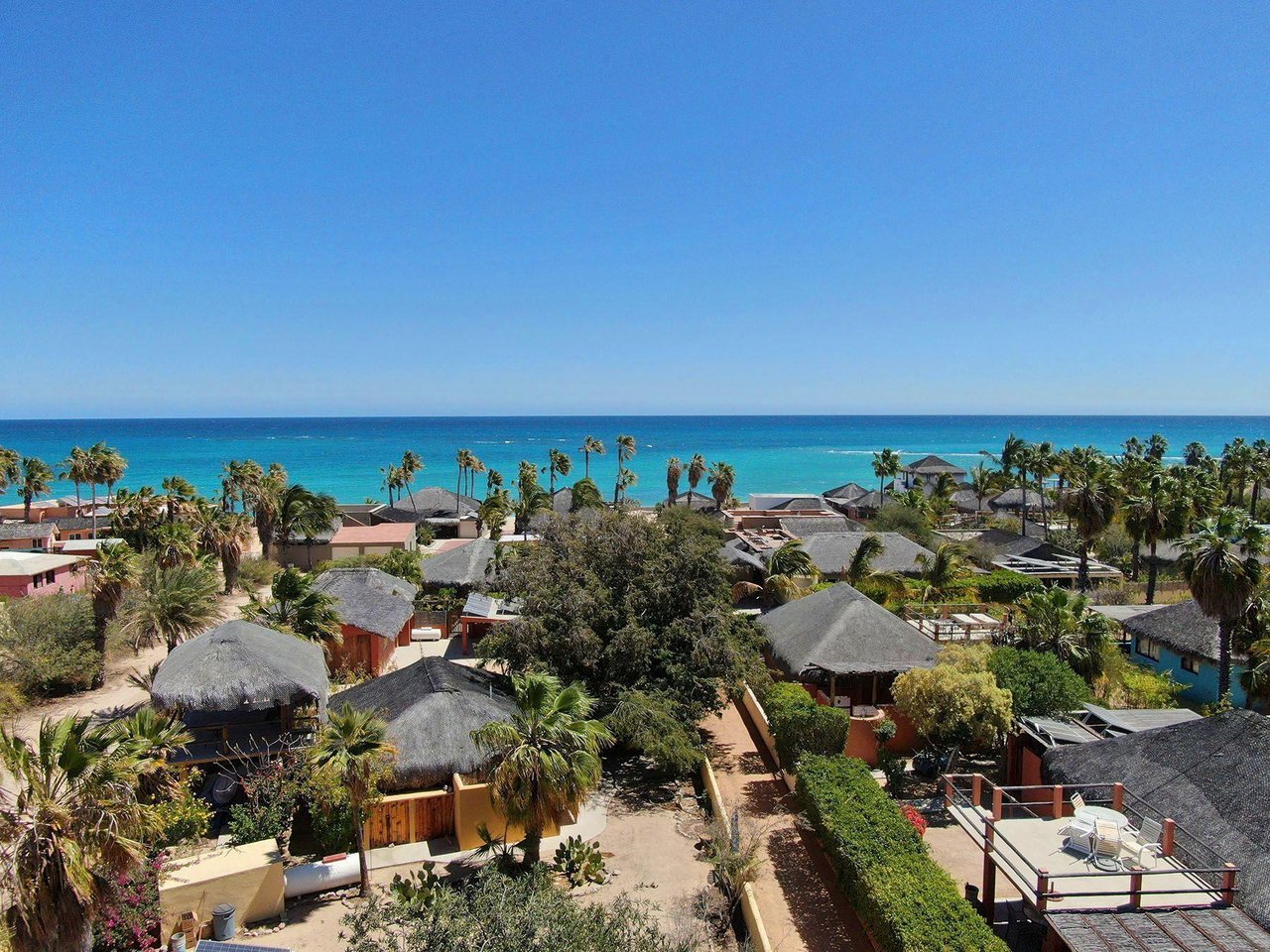
Our success is built on a carefully curated team of real estate advisors dedicated to honesty, integrity, and exceptional client service. Let’s Match Your Vision with The Perfect Property


