You love the idea of a beach home that lives lightly on the land and sea. If Cabo Pulmo is on your radar, you are already thinking about reefs, wildlife, and a simpler way to live. This guide shows you what makes Cabo Pulmo special, what the rules really are, how to plan for water and power, and the due diligence that protects your investment. You will walk away with a clear fit check and practical next steps. Let’s dive in.
What makes Cabo Pulmo unique
Cabo Pulmo is a federally protected national marine park with a formal management plan that sets strict rules for use and conservation. The official Park management plan defines zones and permitted activities, and it is the starting point for any property or build conversation near the park polygon.
The conservation success here is real. A peer‑reviewed study recorded about a 463 percent increase in fish biomass after the no‑take reserve took hold. That rebound reshaped the local economy toward eco‑tourism and explains why both the community and federal agencies scrutinize development. For buyers who value intact nature, this protection adds long‑term appeal, but it also adds rules you must respect.
The place feels different from resort corridors. You get low density, big skies, and a living reef offshore. With that come tradeoffs: fewer public services, careful construction logistics, and a permitting path that demands patience and planning.
Where you can build, and what is restricted
Inside the park boundaries, construction is either prohibited or highly conditional. Zonation maps identify core preservation areas, buffers, and public‑use areas. Before you fall in love with a parcel, verify the exact location against the park polygon and activity zones using the management plan and a map from CONANP.
Beaches in Mexico sit within the federal maritime‑terrestrial zone. This ZOFEMAT band is public, and any use or structures in it require federal concessions and approvals. Federal coastal strip rules are actively enforced, and municipal permits do not replace them. If your lot touches dunes or beach, treat ZOFEMAT as a hard stop until federal permissions are in hand.
Municipal plans also apply. The Los Cabos Plan 2040 guides local land use and building permits. Where municipal rules and federal protected‑area law overlap, federal conservation law will prevail on matters affecting the park.
Permits and ownership basics for foreigners
Building near a protected area involves multiple agencies. Plan for these touchpoints:
- Environmental review: Projects that may affect dunes, wetlands, reef, or coastal water quality typically require an environmental impact authorization. Learn when a SEMARNAT MIA is required, and hire a qualified consultant early for scoping.
- Foreign ownership mechanism: Coastal property for non‑Mexican buyers sits in the restricted zone and is commonly held via a bank trust. The SRE issues permits for this fideicomiso structure. Expect extra closing steps and annual trustee fees.
- Agrarian status: Some rural parcels have ejido histories. Confirm legal regularization with the Registro Agrario Nacional and review applicable agrarian law references such as the DOF guidance to understand process and risks.
- Water rights: New wells and increased extraction require permits. Check aquifer status and CONAGUA requirements for groundwater before you plan supply.
On‑the‑ground reality: water, power, access
Water is the limiting factor. The park plan notes scarce freshwater and a historic reliance on a small number of local wells and cisterns. Expect to combine rainwater harvesting with large storage, potable filtration, and conservative landscapes to reduce irrigation. If your design includes desalination, confirm CONAGUA permits for extraction and any discharge rules in the MIA process with SEMARNAT.
Wastewater is non‑negotiable. The reef’s health depends on keeping nutrients and coliforms out of coastal waters. Budget for advanced septic or biodigester treatment, engineered dispersal, and monitoring. Many projects will need to show wastewater management within their SEMARNAT MIA documentation.
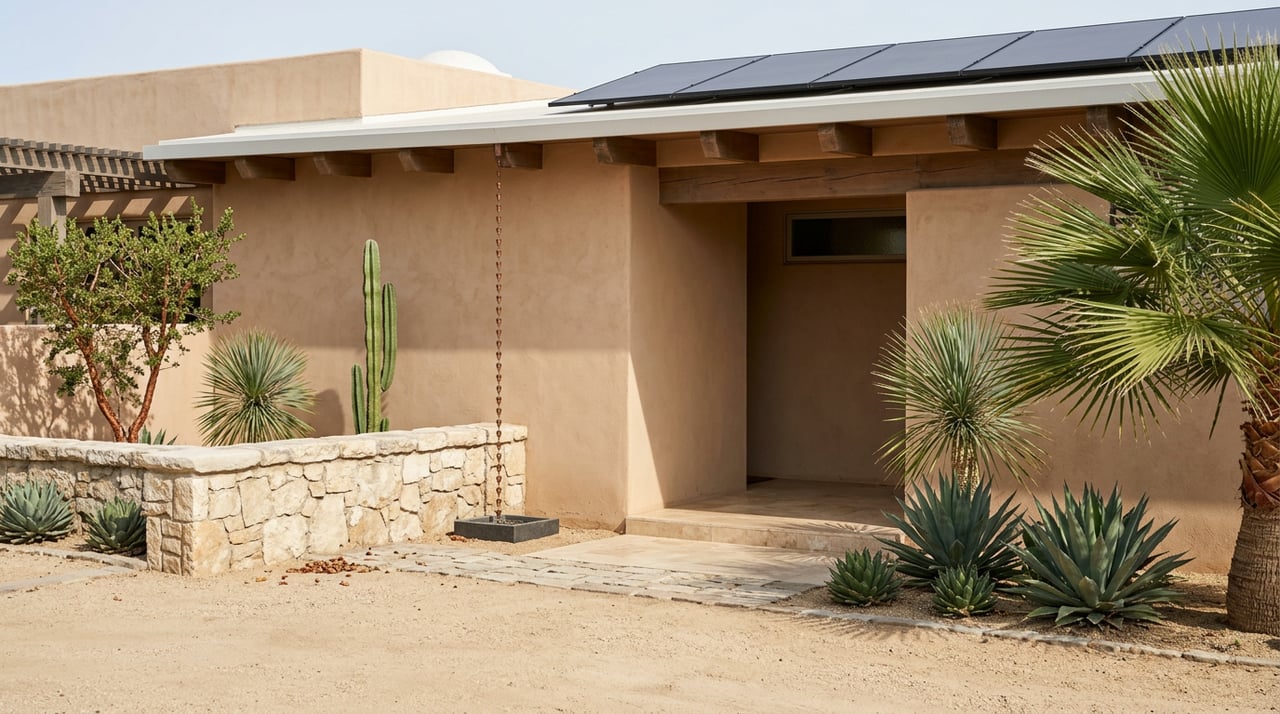
Grid power is limited. Many homes and eco‑operators in the area use solar PV with battery storage as the primary system. Verify any potential CFE grid connection and line‑extension costs with the utility, but plan for self‑sufficiency. The park plan notes that minimal infrastructure has been the historic norm.
Access is part of the charm and the cost. Travel time from Los Cabos International Airport is commonly about 1 to 1.5 hours depending on route and road conditions. Construction materials, heavy equipment, and skilled crews must be trucked in, which raises logistics costs. Local rules also limit vehicle access on dunes and beaches, so plan staging carefully.
Storms are a real design factor. Baja’s Pacific hurricane season brings wind, surge, and debris. The impacts from Hurricane Odile in 2014 illustrate risks to coastal infrastructure, insurance, and design standards. Review hurricane risk research with your engineer, elevate critical systems, and choose resilient assemblies.
Low‑impact design that works here
Your best path is to align your design with the park’s objectives:
- Water strategy: Pair rainwater harvesting, large cisterns, and high‑efficiency fixtures with a backup plan for supply that follows CONAGUA permitting. Use native, drought‑tolerant landscaping to minimize irrigation needs.
- Wastewater protection: Install advanced septic or biodigester systems that fully treat effluent and prevent nutrient loads to the reef. Expect to detail this in any SEMARNAT MIA filing.
- Energy: Size solar PV and batteries for year‑round needs. Use passive cooling, deep overhangs, cross‑ventilation, and high‑performance envelopes to cut generator use.
- Dunes and shoreline: Keep heavy construction off dunes, preserve native vegetation for stability, and avoid hard shoreline works unless explicitly authorized in the park management plan.
- Lighting and wildlife: Follow local planning guidance for turtle‑friendly lighting. Choose amber, down‑shielded, low‑intensity fixtures and avoid direct beach illumination, as recommended in Los Cabos ecological planning proposals.
- Boats and moorings: If you plan boat access, check rules on approach distances, buoy use, and anchoring near coral in the park plan.
Fit check: is Cabo Pulmo right for you?
You will thrive here if you prize conservation and privacy more than amenities and nightlife. Buyers who succeed accept low density, plan for self‑reliance, and invest in durable, low‑impact systems. Many find that the conservation story and intact reef make the lifestyle more rewarding, not less. The region’s community stewardship and eco‑tourism shift also foster a strong sense of place.
If you expect resort services, marinas, dense development, or quick construction timelines, this location may not match your goals. The permitting path is careful by design, and that is exactly why the reef remains vibrant.
Due diligence roadmap
Use this step‑by‑step checklist before you write an offer:
- Confirm the parcel’s exact position against the park polygon and zonation map. Request the official map and review the CONANP management plan.
- Check whether any part of the lot or planned access touches the ZOFEMAT coastal strip. Ask for any existing federal concessions and review enforcement precedents to understand risks of unpermitted works.
- If you are a non‑Mexican buyer, map your path to ownership via a bank trust and review SRE fideicomiso permits. Ask several trustee banks for timelines and fee schedules.
- Verify title: request the Escritura Pública from the seller and commission a certified title search with the local Registro Público. Work with a Mexican Notario Público and a local real‑estate attorney.
- Investigate agrarian status with the RAN. If ejido history exists, obtain assembly minutes and registry entries showing legal transfer or regularization. Review relevant agrarian provisions as context.
- Water supply: request documentation for any existing well permits or concessions, cisterns, and desalination systems. Confirm CONAGUA permitting and aquifer status for any new extraction.
- Environmental authorization: determine if your scope triggers a SEMARNAT MIA. If so, hire an environmental consultant to prepare studies and design mitigation.
- Municipal rules: verify current land use and building standards in the Los Cabos Plan 2040 and request municipal alignments and building permit requirements.
- Community engagement: meet local stewards and community groups early to understand norms around access, visitor volume, and conservation expectations.
- Hazard and engineering: commission coastal, erosion, and hurricane exposure reviews. Use regional hurricane research to inform design standards and insurance planning.
- Logistics and contractors: request quotes for solar, batteries, wastewater treatment, water storage or desalination, and roadworks. Confirm seasonal access and staging that avoid dunes and protected zones.
- Timeline and holding costs: factor in SRE processing for your trust, federal and municipal permits, and the added time for environmental studies. Maintain written estimates for each step.
Red flags that warrant pause: no Escritura Pública, unclear ejido regularization, unpermitted wells or proposed extraction without CONAGUA approval, overlap with core preservation zones or ZOFEMAT without concessions, and heavy unresolved local opposition.
Risk and reward snapshot
- Rewards: a living reef, wildlife, and privacy. The documented ecological recovery adds prestige for buyers who value intact nature. Thoughtful villas that fit the conservation ethos can command a premium with the right audience.
- Risks and costs: rigorous federal reviews, ZOFEMAT constraints, water and wastewater capital costs, potential title or ejido complexity, hurricane exposure, and close community scrutiny of larger projects. The park plan outlines the conservation logic behind these controls.
Next steps
If Cabo Pulmo still speaks to you, the path forward is clear. Start with a parcel‑level fit check against park and coastal rules, then scope water, wastewater, and energy systems that meet conservation goals. Bring in engineering, environmental, and legal partners early so you design once and permit once. With the right team, you can create a low‑impact, resilient home that belongs in this landscape.
Curious which lots or custom‑build options fit your goals and timeline? Connect with the education‑first advisors at Oceanside Real Estate Group to talk through parcels, permitting paths, and smart design choices.
FAQs
What permits do you need to build near Cabo Pulmo National Park?
- Most projects need an environmental impact authorization with SEMARNAT, alignment with the CONANP park plan, municipal building permits, and federal ZOFEMAT concessions if any works touch beach or dunes. See the SEMARNAT MIA overview, the park management plan, and ZOFEMAT enforcement guidance.
How do foreign buyers hold title for Cabo Pulmo property?
- Most non‑Mexican buyers use a bank trust known as a fideicomiso to hold coastal property rights in the restricted zone, with permits issued by the SRE; learn more about the SRE fideicomiso process.
Is water available for new homes in Cabo Pulmo?
- Water is scarce, so plan for rainwater harvesting and storage, conservative landscaping, and permitted supply through wells or desalination; confirm CONAGUA groundwater requirements and review local water context in the park plan.
How far is Cabo Pulmo from Los Cabos International Airport?
- Travel time is commonly about 1 to 1.5 hours depending on your route and road conditions, and the area is more remote than the main resort corridor per the park management plan.
Are hurricanes a concern for Cabo Pulmo beachfront homes?
- Yes, Baja’s hurricane season brings wind and surge, so design for resilience, elevate critical systems, and confirm insurance options based on regional hurricane impact research.
Will the community oppose my project near the park?
- Cabo Pulmo’s conservation‑oriented community supports low‑impact, well‑permitted projects and often resists large, high‑impact proposals; early engagement and alignment with local conservation outcomes improve your social license to build.