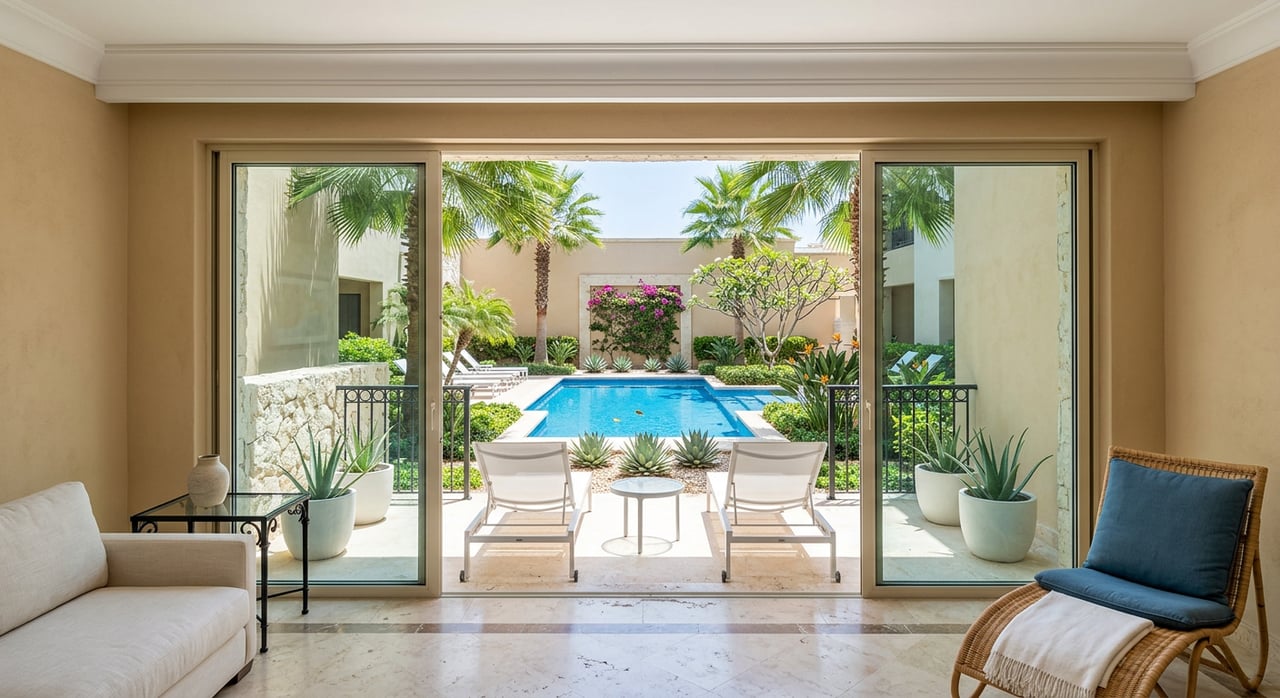
If you love the idea of a turnkey beach lifestyle with dining, day clubs, and golf at your doorstep, the Vidanta Golf & Hotel Zone deserves a close look. You want convenience, solid amenities, and clear guidance on how ownership and rentals work here. In this guide, you will learn what you can buy, how title works for foreign buyers, what HOA fees and rental rules look like, and how to underwrite potential returns. Let’s dive in.
Vidanta zone at a glance
The Vidanta Golf & Hotel Zone sits just east of San José del Cabo and centers on the Vidanta Los Cabos resort, its pools and beach club, and a growing entertainment and dining scene. You can confirm resort location and contact details on Vidanta’s site under Los Cabos guest information and directions to the property’s entry points and valet areas. See the resort’s details on the Vidanta Los Cabos “Getting here” page for context on access and on-the-ground logistics. Visit the resort’s getting here page at Vidanta Los Cabos.
Lifestyle is a major draw. The property has hosted a notable entertainment district with names like OMNIA Dayclub, Herringbone, and Casa Calavera, which boosts on-site energy and influences short-term rental demand. You can read about the launch of this entertainment offering in Grupo Vidanta’s announcement with Hakkasan Group.
One important nuance for golfers: Vidanta’s on-site golf is a smaller resort layout, historically a nine-hole par-35, not a private 18-hole championship club. That difference affects expectations on golf memberships and play format compared to other Cabo communities. A helpful overview of Los Cabos golf options, including Vidanta’s offering, appears in Elite Traveler’s Los Cabos guide.
What you can buy
You will see a mix of real estate and vacation products around the resort corridor. The main categories include:
- Resort-operated hotel suites. Hotel inventory run by the developer or operator. These are typically not deeded as private condos.
- Branded residences or condo-hotel units. Deeded condos with owner use rights, often with optional or required participation in an on-site rental program.
- Freehold condominiums and villas adjacent to the resort. Independent or developer projects in the broader Hotel Zone and nearby communities like La Jolla, Club La Costa, Bahia de Palmas, and Club Campestre.
- Timeshare or fractional interests. Interval products tied to Vidanta’s vacation brands. These have different legal, tax, and resale dynamics than whole-ownership condos.
If you want a conventional deeded condo, focus your search on freehold condominiums and condo-hotel units that clarify owner use and rental rights in writing.
Title and closing basics for foreign buyers
Most of the Vidanta Hotel Zone lies within Mexico’s restricted zone, which means foreign buyers typically hold coastal property through a bank trust, known as a fideicomiso. Mexico’s foreign ministry issues the necessary permit for this trust. You can review the mechanics and permitting on the federal portal that explains the SRE permit to establish a fideicomiso.
Budget for one-time setup items and annual trustee fees as part of your ownership costs. Local closing costs for resort condos commonly fall in the single-digit percentage range of the purchase price, and some developers cite 6 to 7 percent for preconstruction transactions, which often includes initial trust setup line items. A local overview of typical trust and closing costs is available here: fideicomiso costs and FAQ.
HOA rules and fees to expect
Condominium communities in Baja California Sur are governed by the state’s condominium regime law. Before you buy, review the Escritura Constitutiva and Reglamento, how the administrator is appointed, assembly voting rules, how reserves are funded, and how special assessments are handled. These documents drive fee stability over time and define rental and use rules. You can read the state’s framework here: Baja California Sur Condominium Regime Law.
HOA fees vary with amenities. Simpler buildings can run a few hundred dollars per month, while full-service resort condos often fall in the roughly 200 to 800 dollars per month range, with higher figures in ultra-luxury projects. For a quick market overview, see this local guide to Los Cabos condo fees and ranges.
Rentals, registration, and local taxes
If you plan to rent short-term, confirm what the condo rules allow and who will manage compliance. In Mexico, operators who offer lodging must be registered in the Registro Nacional de Turismo. You can review the registration process and requirements here: SECTUR’s RNT guidance.
Baja California Sur applies a local lodging tax on accommodations. The state’s Hacienda Law sets the tax base and a statutory rate of 4 percent on the prescribed base. Hosts and operators are responsible for collection and remittance, so verify whether your manager handles this for you. The legal basis appears in the Ley de Hacienda del Estado de Baja California Sur.
Federal taxes also apply. Short-stay, hospitality-style rentals are typically subject to IVA and income tax rules, and platforms or managers may withhold or remit some taxes on your behalf. A Mexican CPA who specializes in short-term rentals can help you set up correct invoicing and filings.
Underwrite your condo like a pro
Getting your numbers right starts with the right inputs. Use local data, not generic national averages.
Data to gather before you model
- Title and property type. Verify freehold title and confirm the property is not ejidal through a notario.
- HOA financials. Request the last three years of budgets, minutes, reserve balances, and any pending special assessments, plus rental and use rules in the bylaws.
- Rental performance. Ask for the unit’s historical P&L if it has been rented, and the operator’s historical occupancy and ADR if enrolled in a program. If data is limited, use third-party local STR comps. A helpful starting point is the San José del Cabo STR market snapshot.
- Fideicomiso details. Confirm the trust permit, trustee bank, annual fee, and include these items in your expense model if you are a foreign buyer.
Expense lines to model
- HOA or maintenance fees. Test a range that reflects the property’s amenities. Many resort condos will pencil in the 200 to 1,000 dollars per month band.
- Bank trust annual fee. Often a few hundred to a few thousand dollars, plus one-time SRE and bank setup fees at closing.
- Property insurance. Coastal policies can be higher, especially with hurricane and liability coverage.
- Management fees. If you use a program or manager, test 10 to 35 percent of gross revenue based on the contract.
- Cleaning, laundry, and turnover. Budget per-stay amounts or a 5 to 15 percent placeholder if you lack exacts.
- Lodging tax. Add the 4 percent Baja California Sur lodging tax as a pass-through if your platform or manager does not auto collect.
A simple example model
Here is a conservative baseline for a 1 to 2 bedroom condo with owner usage and shoulder-season variability. Replace these with your unit’s actual comps and contracts.
- Assumed ADR: 350 dollars
- Assumed occupancy: 40 percent, or 146 nights per year
- Gross revenue: 350 dollars x 146 nights = 51,100 dollars
Operating deductions to test:
- Management at 25 percent: 12,775 dollars
- Cleaning and variable costs at 10 percent: 5,110 dollars
- HOA at 400 dollars per month: 4,800 dollars per year
- Fideicomiso annual fee: 600 dollars
- Property insurance: 1,200 dollars
- Lodging tax at 4 percent of taxable base: roughly 2,000 to 2,500 dollars depending on inclusions
That setup yields an estimated NOI of roughly 23,000 to 25,000 dollars. On an 800,000 dollar purchase, that implies a cap rate near 3 percent. Resort condos often trade at compressed yields, so you should weigh personal use, potential appreciation, tax planning, and leverage. Always sensitivity test ADR and occupancy up and down by 10 to 20 percent to see how the return profile moves.
How Vidanta compares in Los Cabos
Vidanta’s zone reads like an integrated destination resort with multiple dining options, daylife venues, and a resort-scale golf layout. That is a different feel than private club communities built around championship 18-hole courses or marina access. If you prioritize private club culture, extended member golf, or marina amenities, you might compare with other Los Cabos areas. If you want lock-and-leave convenience and resort services, the Vidanta corridor can be a strong fit. For context on the on-site course type, see the Elite Traveler Los Cabos overview.
Who this area fits best
- Weekend Escapers. You want simple ownership, on-site dining and pool scenes, and easy check-in for friends and family. You may accept a lower annual yield for convenience.
- Investor Managers. You prefer clear rental rights, reliable on-site operations, and known cost structures. Your focus is occupancy, ADR, fees, and reserve health.
- Second-home and longer-stay owners. You value access to services and a temperate, year-round climate. You might favor buildings with a quieter rental profile.
Step-by-step purchase path
- Define product type. Decide between a condo-hotel unit inside a rental program or a freehold condo with flexible self-rental options.
- Confirm title and trust. For foreign buyers, obtain copies of the SRE permit and proposed fideicomiso terms. Review with your notario.
- Review HOA governance. Read the constitutive deed and bylaws. Ask for three years of budgets, minutes, reserve balances, and any pending special assessments.
- Verify rental rules and compliance. Confirm whether the unit can be registered with the RNT and who will collect and remit lodging tax.
- Underwrite with local comps. Use resort or third-party STR data for ADR and occupancy, and load all operating costs before setting price expectations.
- Budget closing costs. Plan for single-digit percentage closing costs, often cited around 6 to 7 percent for resort transactions, including initial trust setup.
- Line up management. Choose between an operator’s program and third-party management, and confirm fee, revenue split, and any blackout periods in writing.
Quick buyer checklist
- Obtain SRE trust permit copies and trustee bank details if applicable.
- Request HOA budgets, minutes, reserve balances, rental rules, and any pending litigation or assessments.
- If enrolled in a rental program, get the current management agreement, revenue split, historical occupancy and ADR, and availability rules.
- Confirm RNT registration path and lodging tax collection and remittance.
- Complete a notary-certified title search and confirm Public Property Registry status.
- Price in closing costs, trust setup, first-year trustee fee, and ongoing HOA and trust fees.
- Get insurance quotes and confirm water, sewer, and internet provisioning that impact rental uptime.
The bottom line
Buying a condo in the Vidanta Golf & Hotel Zone is about trade-offs you can see and price. You get resort energy, dining and day club access, and a lock-and-leave lifestyle that many owners value. In return, yields are often lower than standalone vacation rentals, so careful underwriting and clarity on rental rights, fees, and reserves matter. If you want a guided search and a smooth cross-border process from purchase through turnkey rental management, our team is here to help.
Ready to explore Vidanta-area condos that fit your use and return goals? Connect with the Oceanside Real Estate Group to start a tailored search.
FAQs
What types of condos are in the Vidanta Golf & Hotel Zone?
- You will find condo-hotel units tied to resort programs, freehold condominiums and villas in adjacent communities, and timeshare or fractional products. Focus on deeded freehold condos or condo-hotel units if you want traditional ownership.
Can foreigners own a condo near Vidanta in San José del Cabo?
- Yes. Most foreign buyers hold title through a bank trust called a fideicomiso within the coastal restricted zone. The SRE issues the required trust permit and the trustee bank charges initial and annual fees.
Are short-term rentals allowed and what taxes apply?
- Rules vary by building. If permitted, you or your manager must register as a lodging operator with the RNT, collect Baja California Sur’s 4 percent lodging tax on the legal base, and comply with federal IVA and income tax rules.
What are typical HOA fees in this area?
- Fees depend on amenities. Modest buildings can be a few hundred dollars per month. Full-service resort condos often range around 200 to 800 dollars per month, with higher figures in ultra-luxury settings.
How does Vidanta’s golf compare to other Cabo communities?
- Vidanta offers a resort-scale layout, historically nine holes, suited to casual play. Other Cabo communities often center on private, championship 18-hole clubs with different membership models and expectations.
What closing costs should I budget for a condo purchase?
- Plan for single-digit percentage closing costs that can land around 6 to 7 percent in resort transactions. Include the initial fideicomiso setup and permit, notary, transfer tax, registration, legal fees, and your first year of trustee and HOA fees.